top of page

Is 'lifting heavy' scaring you off the one thing that could help you most?


Some common comments and questions I hear are...

- "When I lift heavy, I hurt myself."

- "What does 'heavy' even mean?"

- "Why can't I just lift weights — does it have to be heavy?"


Here's the breakdown — and it's not just for women in menopause. Men, this applies to you too.


The key in all rep ranges is:

- the difficulty gives the adaptation (ie. your last 1-2 reps are a challenge)

- good form (to keep your joints and spine safe)


What is a rep range?

A rep range is exactly that — a range. Hitting 6 reps for 4 sets? It's time to add weight. You'll likely drop back to 4 reps at the new load — that's normal, not a setback. As you get stronger, the reps climb again. Repeat.


→ 4-6 reps = Maximal Strength. Heavy loads, builds peak strength & bone density.

→ 10-12 reps = Hypertrophy. Muscle building — the sweet spot for body recomposition.

→ 15-20 reps = Muscular Endurance. Lighter load, longer sets — great for beginners & rehab.


"Heavy lifting" specifically refers to that 4-6 rep zone, done with compound lifts — deadlifts, chest presses, squats, anything moving two or more joints. Typically 4-6 sets, with rest in between so your central nervous system can reset. And "heavy" isn't a number on the bar — it's relative to you, a weight that makes 4-6 reps genuinely hard with good form.


Good form isn't a nice-to-have — it's the whole point. Think healthy spine, healthy joints, every rep.


→ Understand the movement pattern so that it is second nature

→ Perform functional warm-up sets that prime the nervous system

→ Choose a rep range where you maintain good form


Muscle Strength ≠ Muscle Mass

Strength is the force a muscle can produce — how much you lift, your grip strength, how much easier everyday tasks feel. Mass is simply how much muscle tissue is on your frame, regardless of how strong it is. Heavy lifting builds strength often before you see much change in mass.


𝗪𝗵𝘆 𝗶𝘁 𝗺𝗮𝘁𝘁𝗲𝗿𝘀 𝗶𝗻 𝗺𝗲𝗻𝗼𝗽𝗮𝘂𝘀𝗲 (𝗮𝗻𝗱 𝗯𝗲𝘆𝗼𝗻𝗱)

→ Improves insulin sensitivity at rest

→ Slows muscle & strength loss

→ Maintains bone density


Bone density decline accelerates through menopause — and men lose bone and muscle mass with age too, the curve just starts later. Heavy lifting isn't reckless. Done with good form and smart progression, it's one of the best things you can do for your body as you age — whoever you are.


And let's remember the key point in all rep ranges: 𝘁𝗵𝗲 𝗱𝗶𝗳𝗳𝗶𝗰𝘂𝗹𝘁𝘆 𝗴𝗶𝘃𝗲𝘀 𝘁𝗵𝗲 𝗮𝗱𝗮𝗽𝘁𝗮𝘁𝗶𝗼𝗻!


Use it or lose it - this expression resonates deeply, especially the 'use it' part.


Muscle loss begins earlier than many realize as we age. To effectively combat this decline, strength training and a protein-rich diet are essential.


After age 30, the average person loses 3–8% of muscle mass every decade, with the rate accelerating after 60. By age 80, many individuals may have lost 30–40% of their muscle from their prime. This age-related muscle loss affects everyone, making it crucial to address its inevitable impacts on health sooner rather than later.


Those who age well—remaining sharp, mobile, and independent into their 70s, 80s, and beyond—often share one commonality: they have maintained their muscle.


Research suggests the following actions:


1. Lift something heavy regularly. Resistance training 2-3 times a week is the most effective way to slow age-related muscle loss. Consistency and progressive challenge are essential.


2. Increase protein intake. Current recommendations suggest 1.2–1.6g of protein per kg of body weight per day for older adults, which is higher than standard dietary guidelines. Distribute protein across meals throughout the day, as protein does not carry over to the next day.


3. Don’t wait for a diagnosis. Muscle loss is gradual and often invisible until it becomes noticeable. By the time someone struggles to rise from a chair or recover from a fall, years of preventable decline may have already occurred.


AI fascinates and unsettles me in equal measure. On one hand, it is a tool that can genuinely simplify life in an increasingly busy world. On the other, there is something concerning about how much control we hand over to systems we do not fully understand. I am no tech expert, but I find myself thinking about it often, particularly where it intersects with the work we do here at The Well.


Fitness Without the Friction thanks to AI Fitness machines

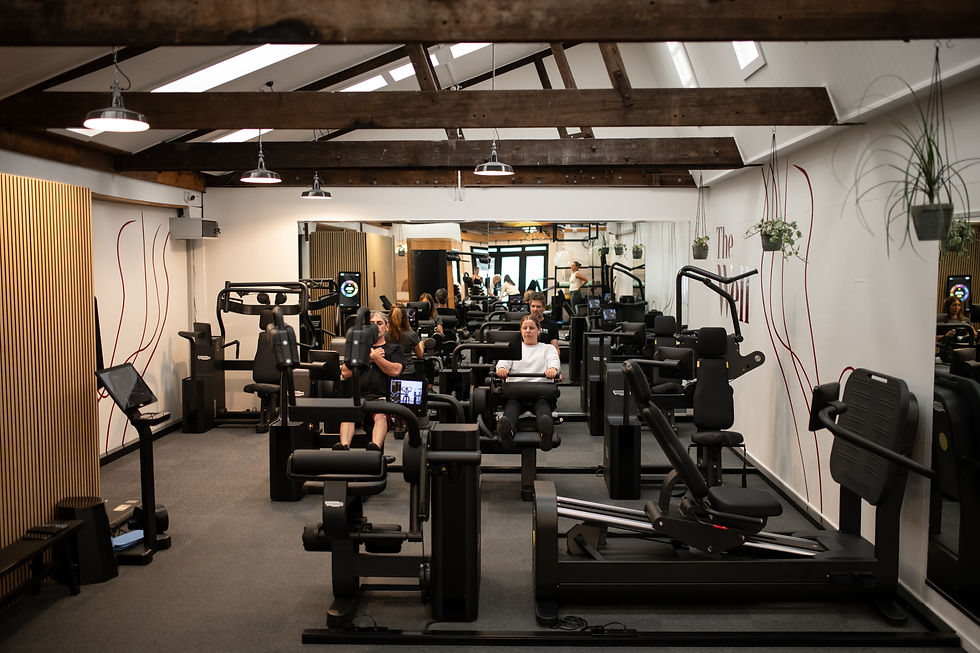
In the fitness space, I have seen AI at its absolute best. When we opened at The Tannery, we were the first gym in New Zealand to introduce Technogym Biocircuit, and it has been a total game-changer for our members.


Every machine in the circuit adjusts automatically to the individual: seat heights, weights, and specific settings are preset. There is no setup, no guesswork, and no wasted time.


Our members can arrive, sign in, and move through a fully guided, motivating workout. That specific "gym floor overwhelm" that stops so many people from starting? It is gone.


No more waiting for machines, or remembering settings

The contrast became clear to me early last year. I went snowboarding in Japan (an incredible trip) and visited a hotel gym on the way home. It was a stark reminder of how friction-filled a traditional gym experience can be.


I found myself waiting for machines, working around people scrolling on their phones between sets, and trying to remember my previous settings. The process took twice as long and delivered half the experience. It made me realize how much we value the seamless nature of what we’ve built at The Well.


What AI Can’t Touch - Human connection

But for all the things technology can enhance, there are elements it simply cannot touch.

Human connection, physical touch, face-to-face conversation, and the feeling of being truly seen by another person are irreplaceable. A spiritual life, whatever that looks like for you, is another example. At The Well, we believe these are not "inefficiencies" to be optimized; they are the entire point of why we gather.


Blogs & Resources

bottom of page